You’re probably dealing with some version of the same daily problem. Output needs to go up. Scrap can’t creep up with it. Operators are hard to hire, harder to train, and the process that “works” on a good day falls apart when volume spikes or a key person is out.
That’s usually when automation enters the conversation, and just as often, so does hesitation. Many plant managers hear “custom automation machinery” and assume it means a large, disruptive capital project with a long timeline and more complexity than they want to manage. In practice, that’s not the only path. Custom automation can be a fixture, a smart tooling upgrade, a semi-automated cell, or a fully integrated system. The right answer depends on the bottleneck, the product, and what your budget needs to do right now.
Manufacturers are moving in that direction for a reason. The global custom automation equipment market is projected to grow at a CAGR of 8.1% from 2025 to 2033, reaching an estimated USD 117.7 billion, driven by efforts to improve efficiency, reduce cycle times, and raise product quality, according to Dataintelo’s custom automation equipment market analysis. If you’re trying to stay competitive, that pressure is already on your floor. A practical view of why smart automation matters in modern manufacturing starts with that reality.
Table of Contents
- The Pressure to Optimize Is Real
- What Is Custom Automation Machinery Really
- Finding Your Place on the Automation Spectrum
- The Blueprint for Success Design and Procurement
- Calculating Cost and Real-World ROI
- Navigating Compliance and Long-Term Support
- Your Next Steps Toward Smart Automation
The Pressure to Optimize Is Real
A production line doesn’t need to be in crisis to justify change. More often, the warning signs are quieter. Operators develop workarounds to keep pace. Inspection becomes more dependent on who’s at the station. Changeovers take longer than anyone wants to admit. Overtime becomes the safety valve.
That’s the point where many teams make a costly mistake. They frame the problem as manual versus fully automated, with nothing in between. That mindset leads to two bad outcomes. Either the project gets pushed off because it feels too big, or a team buys a system that’s more complex than the process needs.
The best automation projects usually start with one stubborn bottleneck, not a plan to automate everything at once.
For small to mid-sized manufacturers, and for regulated production where repeatability matters, optimization usually works better when you right-size it. A semi-automated station with poka-yoke fixtures, guided loading, controlled motion, and a simple vision check can stabilize a process without forcing a full line redesign. A custom fixture can remove variation that no amount of operator training will fix. A well-designed manual assist can improve ergonomics and consistency at the same time.
What pressure looks like on the floor
You’ve probably seen some of these signals already:
- Cycle time drift: The process meets target on one shift and misses it on another.
- Quality dependence on experience: Your best operators hit spec. Newer operators don’t.
- Hidden labor cost: The line “works,” but only with overtime, extra supervision, or constant rework support.
- Capacity blockage: One station throttles the rest of the cell.
- Change resistance: Teams know the process is fragile, so they avoid product or volume changes.
Why a broader view helps
Custom automation machinery isn’t one thing. It’s a way to remove the specific source of instability in your process. Sometimes that means robotics. Sometimes it means servo motion, vision inspection, integrated controls, or better fixturing. Sometimes it means leaving part of the task with an operator because that’s still the fastest and most flexible option.
If you approach automation as a spectrum instead of a binary choice, better options show up quickly.
What Is Custom Automation Machinery Really
Custom automation machinery is purpose-built equipment designed around your exact process, part geometry, tolerance requirements, operator interaction, and production target. That’s the practical definition. It’s not “custom” because it looks complex. It’s custom because it solves a production problem that standard equipment can’t solve cleanly.
An off-the-shelf robot or standard station can be useful when the task is common and the part is forgiving. Trouble starts when your parts vary slightly, the assembly sequence has multiple dependencies, or the tolerance stack leaves little room for error. At that point, generic equipment often needs so many workarounds that it stops being simple.
Custom means the machine fits the process
A good custom system is built around questions like these:
- How is the part presented?
- What variation shows up from upstream operations?
- What force, torque, placement, or inspection criteria matter?
- Where does the operator add value, and where does the process need controlled motion instead?
- What has to be traceable?
- What will maintenance need access to after startup?
Those answers shape the machine architecture. That architecture might include custom nests, EOAT, a pick-and-place module, servo indexing, barcode verification, test stations, or vision guidance. It may also be much simpler than people expect.
A smart fixture is still custom automation if it removes orientation errors, controls part position, and gives the operator a repeatable method. A semi-automated press station with force monitoring is custom automation if it protects a critical assembly step better than a manual bench setup.
Don’t judge the value of custom automation machinery by how many moving parts it has. Judge it by whether it removes a known source of variation.
Where standard equipment falls short
Standard systems are built for broad use. Your process isn’t broad. It has its own part handling issues, floor space limits, changeover needs, and quality risks. That mismatch shows up in familiar ways:
- Extra fixtures get added later because the stock setup doesn’t control the part well enough.
- Operators compensate manually for alignment or feed issues.
- Cycle time varies because the equipment wasn’t designed around the full sequence.
- Inspection gets separated from the process instead of built into it.
- Integration becomes awkward when controls, test data, or traceability need to connect to other systems.
What good custom design actually does
It gives you repeatability without forcing unnecessary complexity. It matches the tooling to the part. It matches the motion to the takt. It matches the controls to the amount of flexibility you need. In medical device work and other quality-critical environments, that fit matters even more because the process has to be stable, auditable, and supportable.
That’s why custom automation machinery should be viewed less like buying equipment from a catalog and more like engineering a production method that happens to take physical form.
Finding Your Place on the Automation Spectrum
A plant manager usually feels this decision when orders are rising, quality escapes are getting expensive, and labor is hard to stabilize. The question is not whether automation sounds good in theory. The question is how far to go without buying complexity your process does not need.
That answer sits on a spectrum. For small-to-mid-sized manufacturers, the best result often comes from choosing the right amount of automation for the bottleneck, not forcing every step into a lights-out concept.
Comparing Automation Levels Manual, Semi-Automated, and Fully-Automated
| Attribute | Manual / Smart Tooling | Semi-Automated System | Fully-Automated System |
|---|---|---|---|
| Initial investment | Lowest upfront cost | Moderate investment | Highest investment |
| Operator involvement | High | Shared between operator and machine | Low during normal operation |
| Throughput potential | Lowest and most operator-dependent | Strong improvement with controlled steps | Highest when demand and process stability support it |
| Process flexibility | Highest for frequent variation | Good balance of flexibility and control | Lower unless designed for changeovers and SKU variation |
| Quality consistency | Depends heavily on training and discipline | Higher consistency through guided motion, fixtures, and checks | Highest when the product and sequence are stable |
| Changeover burden | Usually simpler | Usually manageable with the right fixtures and recipes | Can become more involved if the system is highly dedicated |
| Maintenance demand | Lower machine maintenance, higher process supervision | Moderate | Highest technical depth |
| Best fit | Low volume, variable work, early-stage process control | Small to mid-sized manufacturers improving bottlenecks | Stable, high-volume production with well-defined requirements |
Why semi-automation often makes the most sense first
In many plants, semi-automation gives you the best return because it targets the failure point instead of rebuilding the whole line. A fixture with sensors, a guided press step, a vision check, or a controlled feed system can remove the source of scrap and cycle-time variation without locking you into a rigid platform.
That trade-off matters. Full automation can deliver excellent output when demand is stable, parts are consistent, and changeovers are limited. If your product mix shifts often or engineering changes are still common, a highly dedicated system can turn into an expensive workaround.
Semi-automated cells are often a strong fit because they can give you:
- Better quality control: Interlocks, poka-yoke features, and in-cycle checks catch mistakes before the part moves on.
- Shorter training time: The station helps the operator follow the correct sequence.
- Improved ergonomics: The machine handles force, alignment, or repetition that wears people down.
- Room to expand: You can add stations, recipes, or supporting automation control systems as demand becomes more predictable.
For many shops, that is the practical middle ground. You get repeatability where it matters most and keep operator judgment where it still adds value.
Where over-automation goes wrong
The most common mistake is buying for the future state before the current process is ready. A fully automated concept can look efficient on paper and still struggle on the floor if the inputs are unstable.
Watch for these conditions:
- Upstream variation is still high
- Part presentation is inconsistent
- Demand is not stable enough to justify the capital
- Product revisions are still frequent
- Maintenance and controls support are limited on your team
Any one of those can push a full automation project into long debug cycles, difficult changeovers, and disappointing utilization.
A practical way to decide
Start with the constraint that costs you the most money. If operators are making judgment calls every cycle, begin with smart tooling or a semi-automated station that standardizes the task. If the process is already stable and volume is consistently there, a more dedicated system may be justified.
Use a simple filter:
If the work changes often, stay closer to flexible tooling and operator-assisted automation.
If the sequence is repeatable, quality risk is high, and demand is sustained, move further toward dedicated automation.
If you are uncertain, automate one bottleneck first. That usually shows whether your next dollar should go into more machinery, better fixturing, or tighter process control.
The Blueprint for Success Design and Procurement
A custom automation project goes well when the process is disciplined long before the machine arrives. Most problems that show up during startup were already present in the requirements, assumptions, or design reviews. The machine just made them visible.
If you want fewer surprises, use a structured path. Strong automation control systems are part of that, but controls only work when the project itself is organized.
Start with the process, not the machine
The first useful conversation isn’t “What kind of robot do we need?” It’s “Where does the process break down?” That means documenting the current method, the true bottleneck, the product range, the quality criteria, and the target output. If you skip that, everything downstream gets fuzzy.
A practical early package usually includes:
- A clear problem statement: What the machine must fix.
- Part and process review: Real samples, not idealized prints alone.
- Production goals: Throughput, staffing expectations, and shift assumptions.
- Quality requirements: What must be detected, prevented, or logged.
- Constraints: Floor space, utility limits, existing equipment, compliance needs.
Many teams formalize this in a URS. Whether you call it that or not, the point is the same. Requirements need to be specific enough that engineering doesn’t have to guess.
Engineering choices drive results later
Once the requirements are solid, concept development can move from broad ideas to real machine architecture. At this stage, good partners pressure-test assumptions. Can the part be fixtured repeatably? Does the operator need to load one component manually? Is a servo axis worth it here, or will a simpler mechanism do the job better?
For quality-critical work, the details matter. According to AMD Machines on how custom automated machines are designed, detailed engineering with 3D CAD/CAM can model fixtures that hold parts to ±0.005mm precision, and integrated vision systems can perform 100% inline inspection, reducing scrap from 5% to 0.5% in complex medical device assemblies. Those outcomes don’t happen because a machine is labeled “automated.” They come from fixturing, sensing, and inspection being engineered around the part.
A custom machine should be easiest to maintain at the station where failure would hurt you most.
Validation protects your floor
Build and assembly matter, but validation is where you find out whether the machine meets the job it was bought to do. That’s the purpose of a Factory Acceptance Test. Run the sequence. Verify the cycle. Challenge alarms and fault recovery. Confirm the traceability, reject handling, and operator interface.
Use FAT to answer practical questions:
- Can the station hold target output consistently?
- Does it handle normal part variation?
- Are changeovers clear and repeatable?
- Can maintenance access wear components without tearing apart the cell?
- Does the controls logic help operators recover safely from common faults?
After FAT comes installation, commissioning, training, and handoff. Teams that stay involved through those steps usually get better long-term results because the machine enters production with ownership already in place.
Calculating Cost and Real-World ROI
A packaging line misses target output for three straight weeks. The first reaction is usually to price a fully automated cell. The better question is narrower. What level of automation fixes the constraint without locking you into cost, complexity, and changeover headaches you do not need?
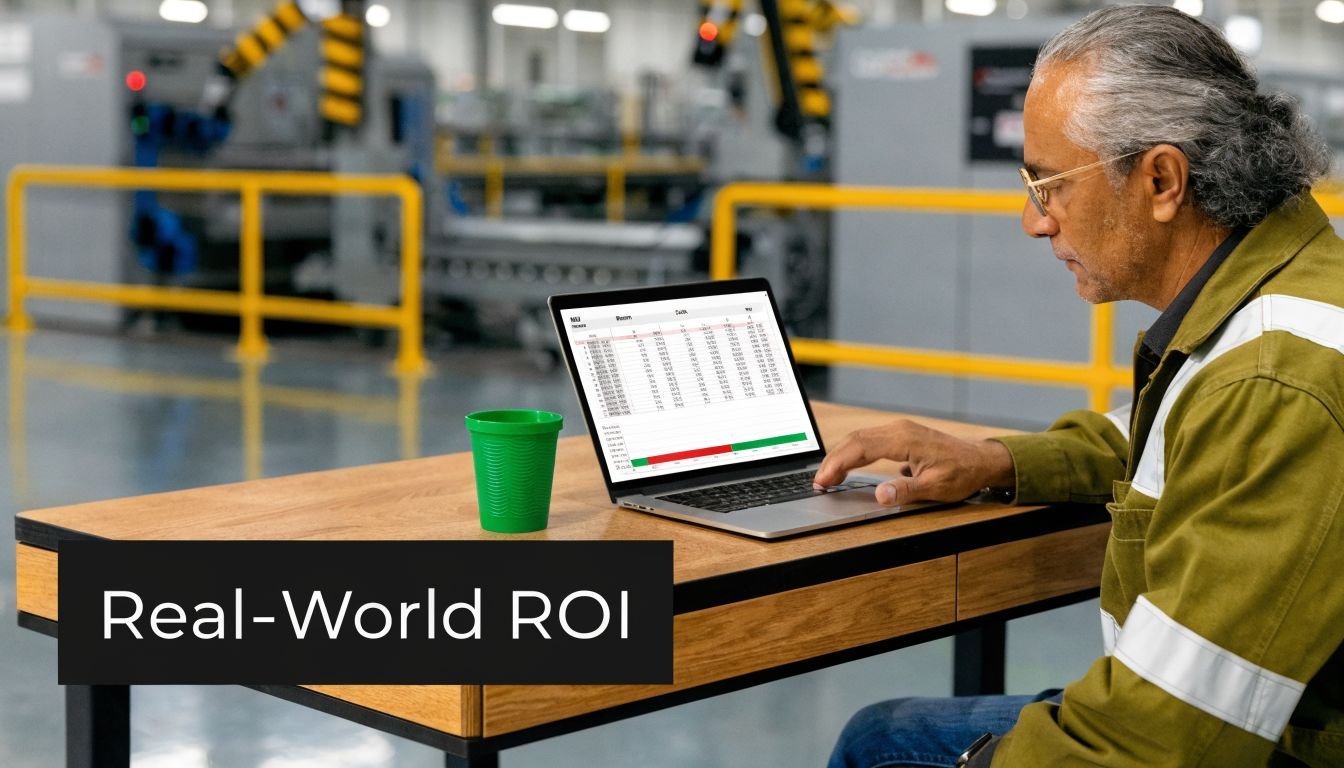
For small-to-mid-sized manufacturers, the best return often comes from selective automation. A semi-automated station, smart fixturing package, or poka-yoke-assisted workcell can remove the bottleneck faster than a lights-out system, with less risk during launch and fewer maintenance demands after handoff.
What drives the investment
Two projects can use similar frames, guarding, and controls hardware and still land far apart on price. Engineering time usually explains the gap.
The biggest cost drivers are usually tied to how difficult the process is to control day after day:
- Process complexity: Multi-step assembly, coordinated motion, testing, and part variation increase design and debug time.
- Station count and handoffs: More stations create more interfaces, more failure points, and more controls work.
- Fixturing and tooling: Unstable parts, cosmetic surfaces, or tight orientation requirements often demand custom nests, EOAT, and mistake-proofing.
- Inspection and data requirements: Vision, force monitoring, leak test, traceability, and logged results add value, but they also add setup and validation work.
- Software and plant integration: HMIs, recipes, user permissions, and communication with your MES or other equipment can be straightforward or time-consuming.
- Serviceability: Access to sensors, wear items, and common adjustment points affects build effort up front and downtime later.
That last point gets missed all the time. A low quote can look good in procurement and turn into a bad ownership decision once your team starts fighting routine faults on second shift.
ROI is broader than labor savings
Labor matters, but labor-only math can push you toward the wrong machine.
In many plants, the strongest return comes from one of three places: higher throughput at the constraint, lower scrap from repeatable positioning and checks, or more stable output across operators and shifts. If a semi-automated cell gets you those gains with simpler controls and faster changeovers, it may beat a fully automated system on payback even if the headline labor reduction is smaller.
That is why I usually tell teams to model two or three options, not one. Compare a manual improvement, a semi-automated station, and a higher-complexity automated cell. You often find that the middle option carries the best balance of output, flexibility, and capital risk.
Before approving a project, build the case around the actual losses in the current process:
- How much output is the bottleneck holding back?
- How much scrap or rework comes from manual variation, missed steps, or poor part presentation?
- How much overtime, supervision, or firefighting is required to keep the line on target?
- What is the cost when a skilled operator is absent or reassigned?
- How often do changeovers slow production or create startup scrap?
- Will the proposed solution still fit your product mix a year from now?
A good ROI model should also include ramp-up and acceptance. If the machine builder cannot prove cycle time, fault recovery, and operator use before shipment, your payback clock starts slipping. A disciplined Factory Acceptance Test process for custom automation equipment helps you catch those risks before they hit your floor.
Here’s a short visual explanation of how teams think about automation economics on the floor:
Practical rule: If your ROI model only counts labor, you are probably undervaluing throughput, quality, and uptime, which are often the real reason the project pays for itself.
The strongest business cases are built around your bottleneck, your staffing reality, and your mix changes. That usually leads to a better answer than chasing maximum automation for its own sake.
Navigating Compliance and Long-Term Support
In regulated manufacturing, and especially in medical device production, a machine isn’t done when it cycles parts. It has to support the way you document, validate, monitor, and maintain the process. That’s where compliance and long-term support stop being separate topics. They’re tied together from the first design review onward.
Compliance starts in the design review
A compliant machine is usually a well-disciplined machine. It controls the process, records what matters, and makes it easier for operators to do the right thing the same way every time.
In practice, that often includes:
- Traceability features: Barcode scanning, serialized records, and logged test results where required.
- Controlled access and recipes: Operators can run approved settings without guessing or bypassing key steps.
- Inspection built into the process: Quality checks happen at the station, not only after defects are created.
- Clear documentation support: Drawings, electrical packages, software revisions, and validation records stay organized.
- Cleanable, serviceable layouts: Especially important where product handling and GMP-aware practices apply.
For regulated teams, the handoff package matters almost as much as the mechanical build. If maintenance, quality, and validation don’t get what they need, the machine can create friction even when it performs well technically.
A strong Factory Acceptance Test process for automated equipment is one of the best ways to catch compliance gaps before installation. FAT shouldn’t be treated as a formality. It’s where you verify that the system behaves the way production and quality both expect.
Support after startup matters more than most teams expect
Most custom automation machinery runs well at startup if the build is competent. The actual test comes later, when parts wear, new operators come in, product revisions show up, and production wants more from the same footprint.
That’s why support planning should cover more than emergency service calls. It should include preventive maintenance, spare parts planning, training refreshers, and a clear path for software or sensor updates when the process evolves.
Modern support models also include predictive tools when the line justifies them. According to SDC Automation’s buyer’s guide for custom automation machines, AI-powered predictive maintenance can analyze sensor data and flag issues such as a 10 to 15% increase in vibration amplitude indicating bearing fatigue up to 72 hours before failure, and industrial deployments have shown 30 to 50% improvements in mean time between failures. That kind of capability can be valuable when downtime is costly and the process needs to stay stable.
The machine you want is not the one that runs perfectly on day one. It’s the one your team can keep running well after months of production pressure.
A supportable machine has accessible wear parts, understandable alarms, documented controls, and a maintenance strategy that fits your team’s real capabilities. If those things aren’t discussed before purchase, they tend to become expensive after commissioning.
Your Next Steps Toward Smart Automation
The right automation decision usually isn’t a big leap. It’s a focused move against the process that causes the most pain today.
If you’re evaluating custom automation machinery, start with one bottleneck and be honest about what that bottleneck is costing you. Not just in labor, but in lost throughput, inconsistent quality, overtime, operator strain, and management attention. Then decide what level of control the process needs. In many plants, that answer is not full automation. It’s a right-sized station, smarter tooling, better fixturing, integrated inspection, or a semi-automated cell that can scale later.
A few practical first steps help:
- Map the bottleneck clearly: Identify where output slows, variation appears, or defects are introduced.
- Gather real process inputs: Part samples, current cycle times, reject causes, and changeover pain points.
- Separate needs from assumptions: You may need controlled motion and inspection, not a fully lights-out system.
- Include maintenance early: Their input will shape service access, spare parts strategy, and controls expectations.
- Think in phases: The best first investment often creates a platform for later expansion.
Smart automation isn’t about buying the most advanced machine in the room. It’s about putting the right amount of engineering in the right place so your production gets more stable, more repeatable, and easier to grow.
A good project starts with a real production problem and a practical conversation.
If you’re ready to evaluate a bottleneck, improve quality, or find a better fit between your budget and your production goals, System Engineering & Automation can help you assess the right level of automation. Their team builds cost-effective manufacturing solutions ranging from custom tooling and semi-automatic systems to integrated controls and full equipment support, with a practical focus on safety, repeatability, and real-world ROI.