A turnkey system is a complete, working system delivered by one contractor and handed over ready to run, so the buyer doesn't have to integrate separate components.
You may be considering one because your production bottleneck needs more than another machine. The press needs safer loading, the conveyor needs a reliable inspection signal, and your maintenance team doesn't have time to coordinate equipment suppliers. The important question isn't just whether a contractor can build it. It's what that contractor promises to make work, and what you still need to provide.
Table of Contents
- What a Turnkey System Is in Plain Terms
- Who Owns What from Design to Commissioning
- Turnkey vs Semi-Automated and Custom Solutions
- Benefits and Risks of Buying Turnkey
- Three Manufacturing Turnkey Projects in Practice
- Cost, Timeline and Acceptance Stages to Expect
- Confirm Whether a Turnkey Contract Fits Your Plant
What a Turnkey System Is in Plain Terms
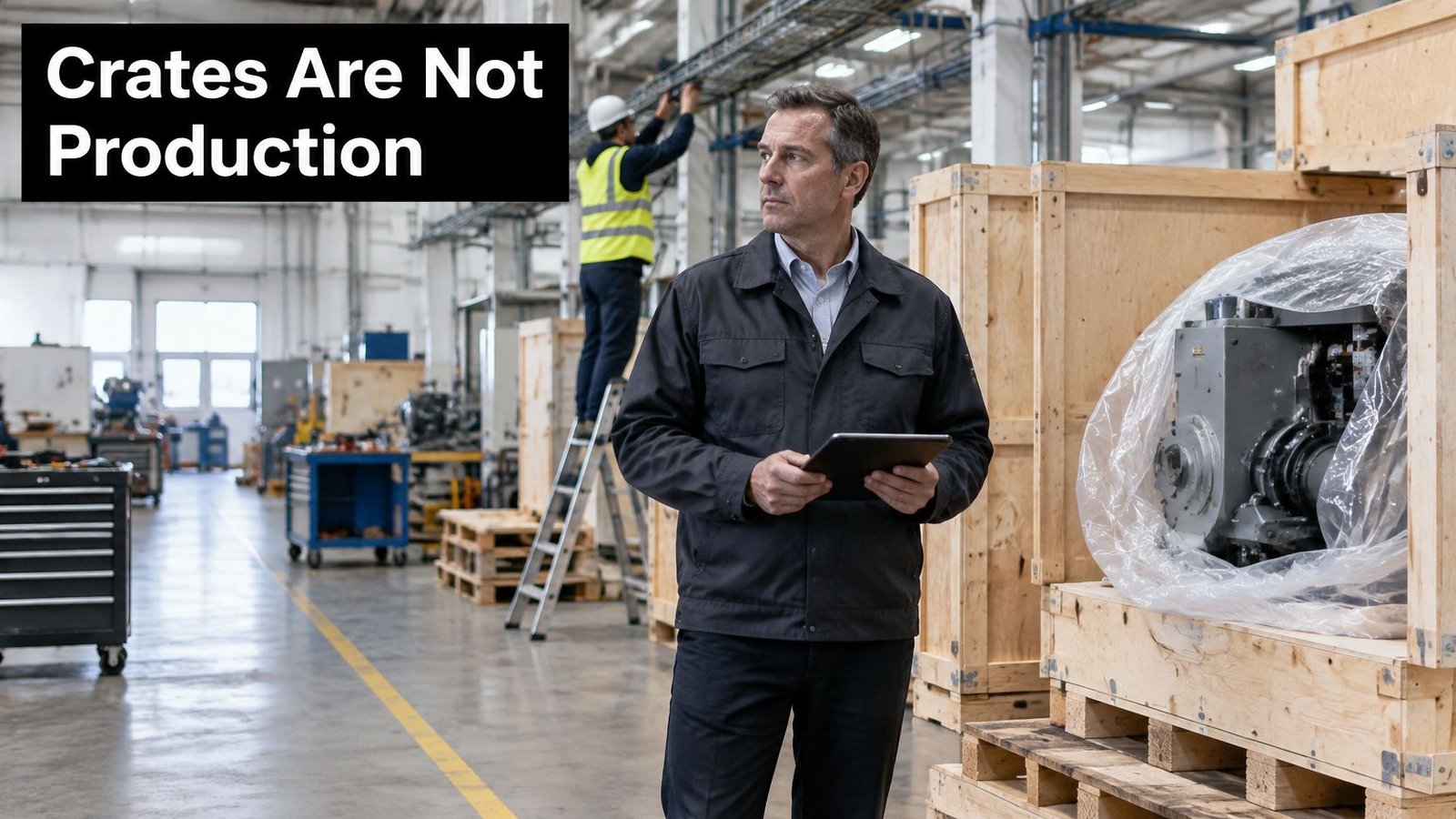
Say a new machine arrives in crates. Before it produces an acceptable part, you need an electrician, a controls programmer, a safety assessment and considerable tuning. You've bought equipment, but you haven't necessarily bought an operating production system.
A turnkey arrangement closes that gap. The principal contractor takes responsibility for delivering the agreed operating result, including the connections between equipment, tooling and controls.
Think of a working kitchen
Buying turnkey is like buying a furnished, working kitchen rather than purchasing appliances, cabinets and plumbing separately. Someone has already checked that the oven fits, the electrical supply is suitable and the sink drains properly. You still decide what the kitchen must do and whether the finished result meets your needs.
In industrial applications, IEEE's turnkey-project overview identifies manufacturing plants and chemical-processing facilities as relevant examples. The same delivery principle also fits a semi-automated workstation, a fixture-and-controls package, a complete production line or a factory installation.
Delivery isn't the finish line
The defining milestone is tested handover in your operating environment, not the arrival of hardware. A machine that cycles without material hasn't necessarily demonstrated that it can handle your parts, reject defective output or recover safely from an interrupted cycle.
Judge the offer by what you can accept at handover, not by how much equipment appears on the quotation.
That distinction makes the practical buying questions clearer: what's included, which delivery approach fits your production, how the price is built and what evidence establishes completion.
Who Owns What from Design to Commissioning
A turnkey contractor should make responsibility visible before engineering begins. The following sequence shows the work and the customer inputs that keep it moving.
The project stages form a connected process, not independent purchases.
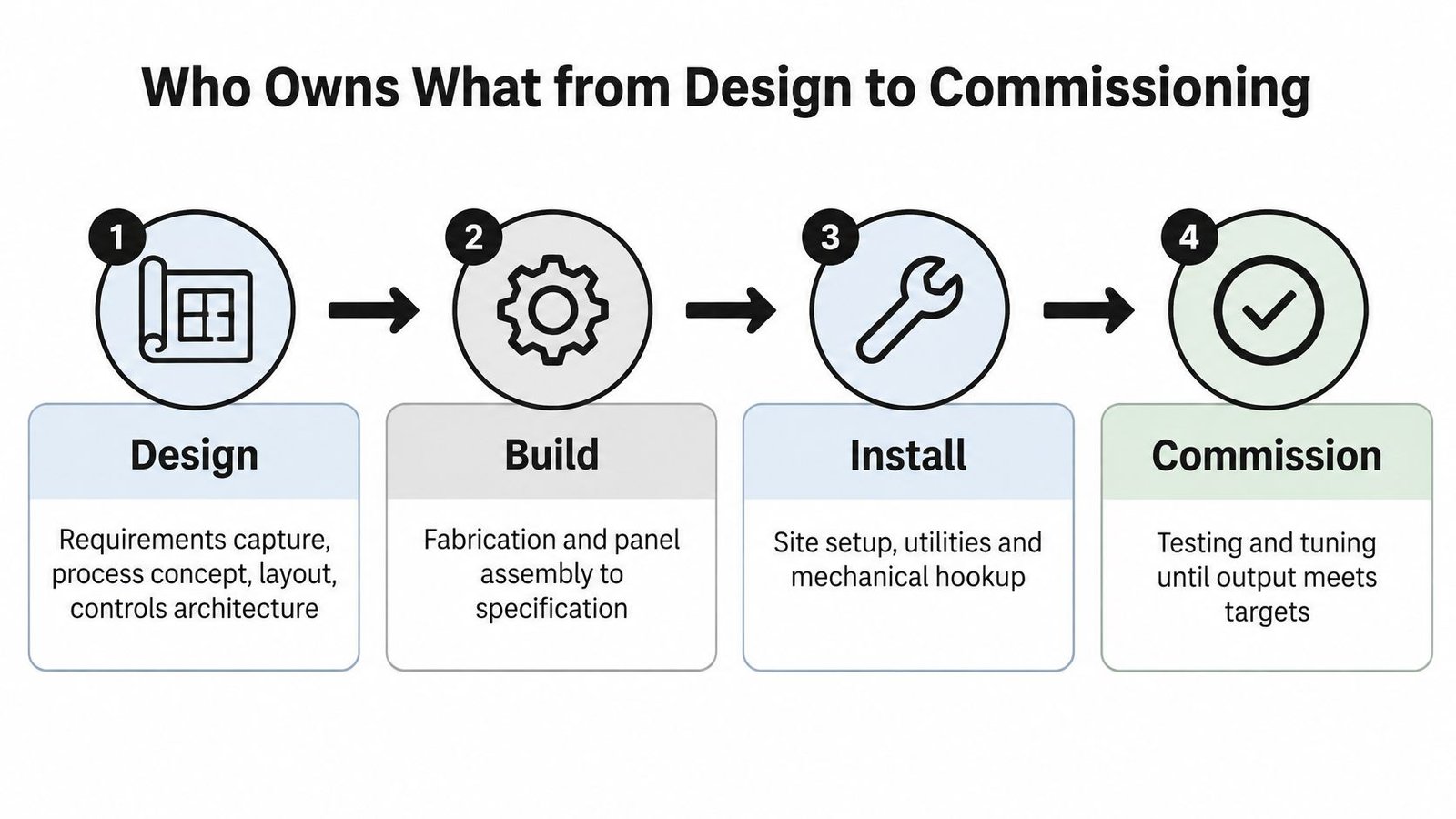
Who does what in each turnkey phase
| Phase | Provider Handles | Buyer Handles | Done When |
|---|---|---|---|
| Design | Process concept, layout, controls architecture, drawings | Approves user requirements and specification | Design review signed off |
| Build | Procurement, fabrication, tooling, programming | Supplies product samples and site data | FAT passed before shipment |
| Install | Mechanical and electrical installation, safety interlocks | Prepares power, air, floor space and access | Installation checks complete |
| Commission | Testing, trial runs, operator training, documentation | Provides operators and production material | SAT passed and handover signed |
During design, the provider turns your production need into an executable specification. Your job is to approve the intended operation, including product variants, acceptable defects, maintenance access and how operators will recover from faults.
During the build, the contractor purchases components, manufactures tooling and develops the control program. Provide representative parts, including acceptable variation, rather than only ideal samples. Otherwise, the factory test may prove that the equipment handles a narrower product range than your plant actually makes.
Installation requires a prepared site. Confirm supply voltage, compressed-air quality, floor loading, access routes and connections to existing equipment before dispatch.
Commissioning proves the connected process
Commissioning brings the equipment into working production conditions. Your operators should participate in trial runs, fault recovery and training so that sign-off reflects actual use rather than a demonstration performed only by the programmer.
Global Automation Technologies' turnkey-system description emphasizes unified responsibility across engineering, tooling, safety, programming, commissioning and documentation. Mechanical tolerances, programmable logic controller (PLC) logic, robot motion, safety interlocks and production data all have to work together, which is why that single point of accountability carries weight.
A manufacturing system integrator should therefore answer for the interfaces, including situations where individually functional devices don't operate correctly together. On larger projects, the engineering, procurement and construction structure, commonly called EPC, organizes that work through commissioning.
Use the project sequence below as a prompt when discussing the proposed delivery scope.
Your contract should identify who authorizes each handoff. An unresolved design decision shouldn't slip unnoticed into becoming an installation problem.
Turnkey vs Semi-Automated and Custom Solutions
| Approach | Who Integrates | Speed to Production | Flexibility After Handover | Best Fit |
|---|---|---|---|---|
| Turnkey, fully automated line | One contractor | Longest lead time among these typical options | Limited unless upgrades are designed in | High-volume lines with stable products |
| Turnkey, semi-automated station | One contractor | Shorter lead time for a narrower scope | High when operators can adapt tooling | Smaller runs and frequent changeovers |
| Custom build by in-house or freelance team | Buyer or custom engineer | Set by team capacity and technical uncertainty | High if documented well | Unusual processes with no standard equipment |
| Components bought and integrated in-house | Buyer | Fast purchase, potentially slow integration | High, but buyer owns integration risk | Plants with strong controls engineering staff |
Turnkey describes delivery accountability; semi-automated describes the division of work between people and machines. A custom machine can also be turnkey if its contractor accepts the complete integration scope. These aren't mutually exclusive equipment categories.
Match the approach to the process
A fully automated turnkey line suits repetitive production with stable parts and predictable demand. Within the options above, it generally requires the greatest upfront investment and longest development effort because the contractor must engineer automatic handling, process control and recovery across the line.
A turnkey semi-automated station leaves selected tasks with an operator. Fixtures, pneumatic clamps, torque-controlled tools and inspection sensors can improve consistency without forcing every loading or changeover task into an automatic sequence. Compare semi-automatic and fully automatic equipment by the tasks you need to control, not by how impressive the machine looks.
A custom build managed by your own engineer can suit an unusual process for which standard equipment won't work. The trade-off is continuity: your plant needs usable drawings, commented programs and test records if the original designer becomes unavailable.
Buying components separately can avoid the contractor's integration margin. It also puts your team in charge of selecting compatible devices, resolving supplier disputes and debugging the assembled process.
Practical rule: Automate the task that limits production, not every task within reach.
Operator-assisted equipment can preserve product flexibility and reduce the extent of automated functions requiring validation. The more often your product mix changes, and the fewer controls engineers you have available, the more valuable clearly contracted turnkey accountability becomes.
Benefits and Risks of Buying Turnkey
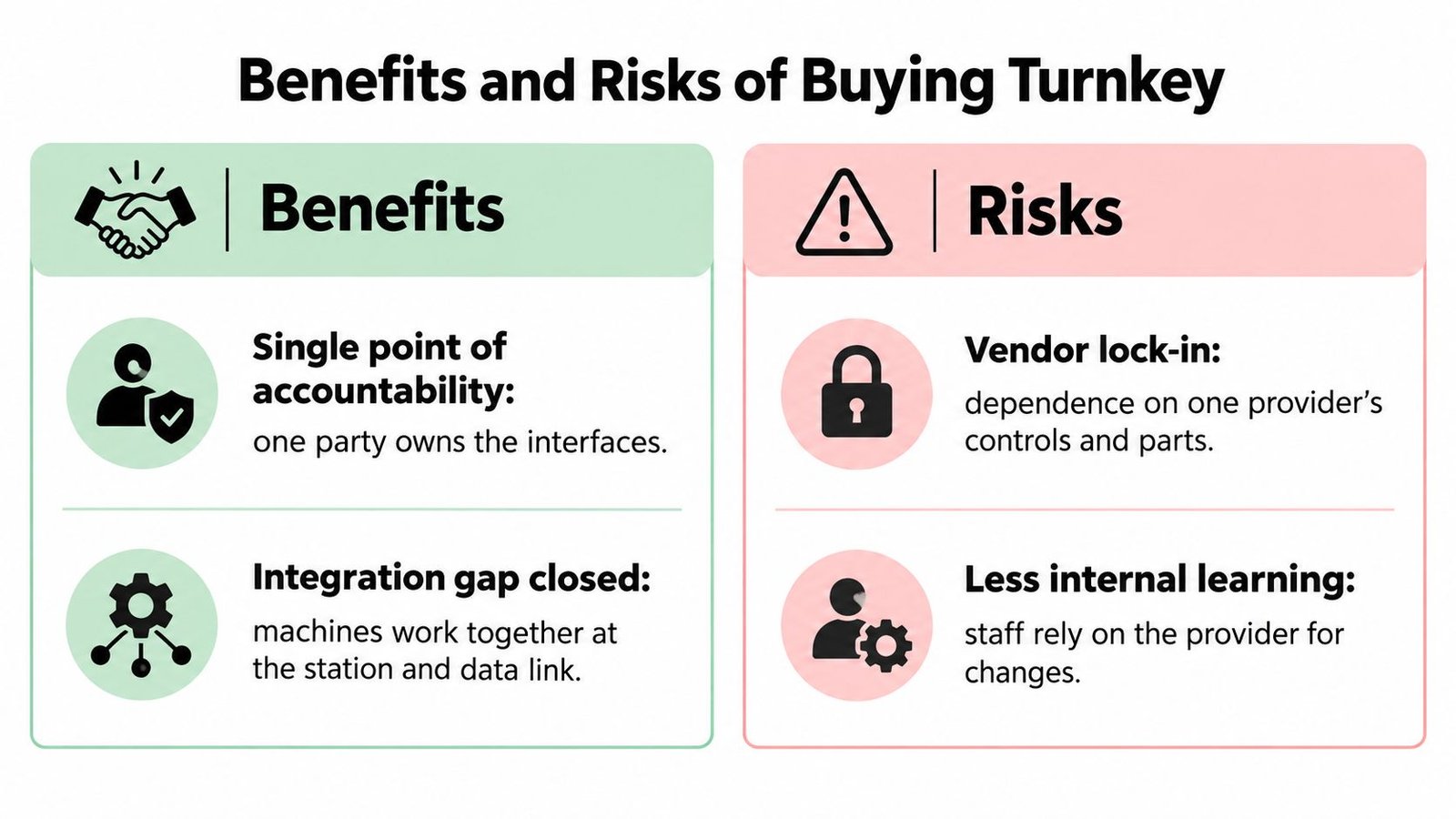
The main benefit is a defined owner for integration problems. If a conveyor transfers parts incorrectly despite meeting its standalone specification, the contractor must resolve the agreed system-level performance issue.
You also have fewer supplier coordination meetings, a consolidated schedule and a clearer route from production requirements to documented handover. Your team can focus on production decisions rather than mediating between programmers, equipment builders and installers.
Put serviceability in the purchase scope
Deloitte's smart-manufacturing analysis reports 53% less unplanned downtime and 79% fewer defects in one comparison of preventive or predictive maintenance against reactive maintenance, and 19% less unplanned downtime and 87% fewer defects in another comparison.
Those are maintenance findings, not guaranteed benefits of purchasing turnkey equipment. They support specifying accessible wear components, useful diagnostics, condition monitoring where appropriate and service arrangements that help your maintenance team act before failure.
Test each risk against a contract provision
- Higher upfront price: A bundled offer can obscure allowances and margins. Request an itemized scope, explicit exclusions and a written method for pricing changes.
- Vendor lock-in: Proprietary controls can make routine modifications expensive. Specify approved component platforms, software access rights and transferable licenses.
- Remote-access exposure: An unattended service connection can create unnecessary access to production equipment. Require approved connection methods, named authorization and access logging.
- Product changes: A new part geometry may require new tooling, programming or inspection. Define the supported product envelope and a change-order approval procedure.
- Knowledge concentrated outside your plant: A contractor's expertise won't automatically become your maintenance team's capability. Include training deliverables, troubleshooting instructions and restore procedures.
The strongest protection is a deliverables register attached to the contract. Give every promised document, training session and service obligation an owner and an acceptance condition.
Three Manufacturing Turnkey Projects in Practice
Example of a metal shop removing a loading bottleneck
A small metal shop runs a manual press, but operators lose production time positioning and securing each part. A turnkey provider designs a semi-automated station with locating fixtures, pneumatic clamping, a risk-assessed light-curtain safety function and a PLC cycle counter.
The shop receives commissioning and operator training under the same contract. Drawings and controller backups are included in handover.
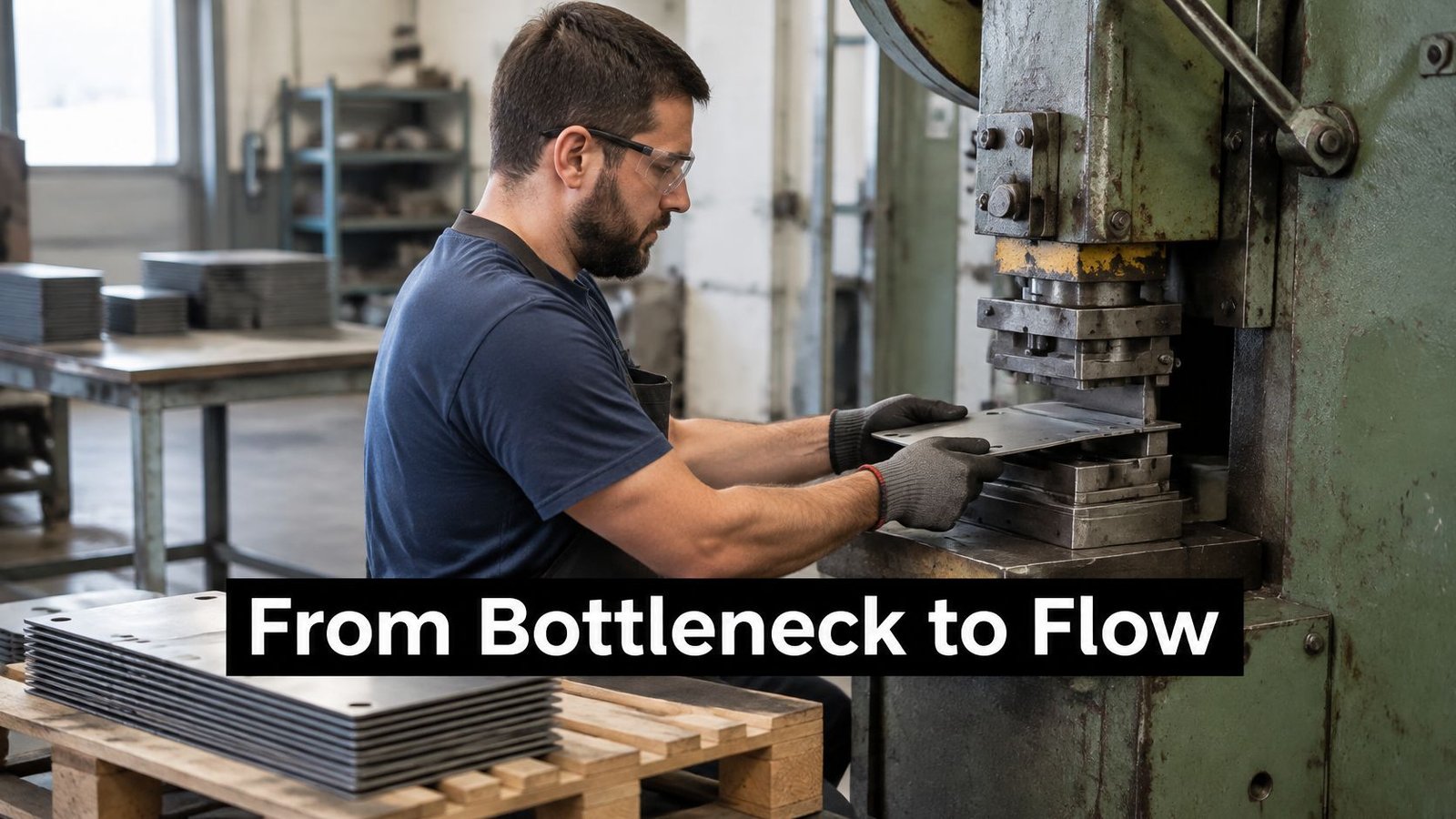
What they got right: The buyer defined acceptable part variation and safe loading behavior before the fixture design was approved. The provider could then design around real production conditions.
Example of a packaging line sharing controls
A packaging operation needs a robot, conveyor, vision check and label printer to share an operator interface and production log. Purchasing each device separately wouldn't establish who handles a missed inspection result or a label mismatch.
The turnkey scope includes communication between devices, reject confirmation and restart behavior after a jam. Acceptance uses agreed cycle-time and reject-rate criteria, with test conditions recorded.
What they got right: The buyer specified how abnormal parts and interrupted cycles must be handled, not just how good parts move through the line.
Example of medical-device production
A United States medical-device producer needs an assembly process that supports its quality system. The FDA's Quality Management System Regulation overview states that QMSR became effective on February 2, 2026, incorporating ISO 13485:2016 into 21 CFR Part 820.
The illustrative turnkey scope therefore includes validation evidence, controlled change records and serial or lot traceability where applicable. Quality personnel approve the required records before the controls developer designs the data collection.
What they got right: The manufacturer defined which production evidence it needed to retain. Before signing, each buyer established the product boundaries, operating conditions and evidence that would make acceptance meaningful.
Cost, Timeline and Acceptance Stages to Expect
| Stage | When It Happens | What It Proves |
|---|---|---|
| FAT (factory acceptance test) | Before shipment, at the provider's facility | Equipment meets the agreed specification in controlled conditions |
| SAT (site acceptance test) | After installation, at the buyer's plant | System works with the real utilities, layout and controls |
| IQ (installation qualification) | After installation, before operation | Equipment is installed correctly and documented |
| OQ (operational qualification) | Before production use | Operating ranges, alarms and safety functions perform as specified |
| PQ (performance qualification) | During production runs under normal conditions | Output is repeatable with real materials, shifts and operators |
Not every project needs every checkpoint, and qualification activities may be coordinated with acceptance testing. FDA process-validation guidance describes validation as objective evidence that a process consistently produces output meeting predetermined specifications. A successful dry run alone doesn't establish that consistency.
Compare scope before totals
Automation level, station count, custom fixtures, controls software and safety functions drive engineering effort. Validation documentation, operator training, spare parts and commissioning support also belong in the comparison.
A lower quotation may exclude work another contractor has included. Ask each bidder to price the same deliverables and identify allowances rather than comparing bottom-line totals alone.
Use a factory acceptance test plan to establish which functions must be demonstrated before you authorize shipment. Include representative materials, fault conditions and a process for closing outstanding issues.
Build the schedule around decisions
The practical sequence runs from design review through long-lead procurement of items such as drives and robots, fabrication, FAT, shipment, installation and SAT. Regulated processes can also require approved qualification protocols and production runs that generate validation evidence.
Late approvals, missing product samples and an unprepared site can delay completion even when fabrication finishes on schedule. Ask for named milestone owners, acceptance dates and customer-input deadlines, and hold a contingency for approved changes.
A delivery date without the buyer's input deadlines isn't a usable project schedule.
Confirm Whether a Turnkey Contract Fits Your Plant
Use these yes-or-no questions before requesting a quotation:
- Engineering capacity: Does your plant lack available controls or automation engineers?
- Changeovers: Does your product mix require frequent setup changes?
- Repeatability: Must production consistency be demonstrated beyond a dry run?
- Quality system: Do you operate under regulated requirements such as QMSR?
- Acceptance criteria: Can you define cycle time, uptime, reject rate and changeover requirements?
- Future upgrades: Will the equipment need modification within your planning horizon?
- Site readiness: Are power, compressed air, floor loading and access prepared?
- Quote completeness: Does each bid itemize validation documents, spares and training?
Mostly yes supports buying turnkey accountability. Mostly no, combined with stable products and capable internal engineers, may favor component purchasing. Missing acceptance criteria or site readiness means you have preparation work to complete, not a reason to rush into either model.
Check ownership beyond startup
NIST's 2025 draft Manufacturing Profile for Cybersecurity Framework 2.0 provides a risk-based roadmap for manufacturing cybersecurity. Treat the installation as an operational-technology asset: request program access, network documentation, controller backups, electrical drawings, component lists, license ownership, patching responsibilities and exit options.
Outsourcing engineering doesn't transfer your quality obligations. You still approve requirements, validation decisions and controlled production changes.
This week, write a concise requirements brief covering throughput, changeover, safety and documentation. Request proposals from System Engineering & Automation (SEA), which advises on automation level, and other suitable integrators; compare them against identical handover criteria.
System Engineering & Automation offers manufacturing solutions including semi-automated equipment, custom tooling, fixtures and integrated controls, supported by design, installation, commissioning and ongoing service. Visit System Engineering & Automation to discuss your production bottleneck and define a turnkey scope that fits your process, budget and maintenance capabilities.